CRE Market Outlook 2024-2026
May 19, 2026
What actually defines the CRE recovery as of 2026, and what does that mean for capital allocation? Which parts of the old post-rate-shock thesis still hold, which parts have chang…
May 19, 2026
What actually defines the CRE recovery as of 2026, and what does that mean for capital allocation? Which parts of the old post-rate-shock thesis still hold, which parts have chang…
Fresh CRE Terminal research, newly published market allocation work, and current-cycle intelligence updates.
How should capital allocate across Texas in 2026 without treating the state as one generic Sun Belt growth trade?
This reviewed framework should be read through Analyses Hub, Sun Belt Geography Hub, National Industrial Capital Allocation 2026, National Multifamily Capital Allocation 2026, Nat…
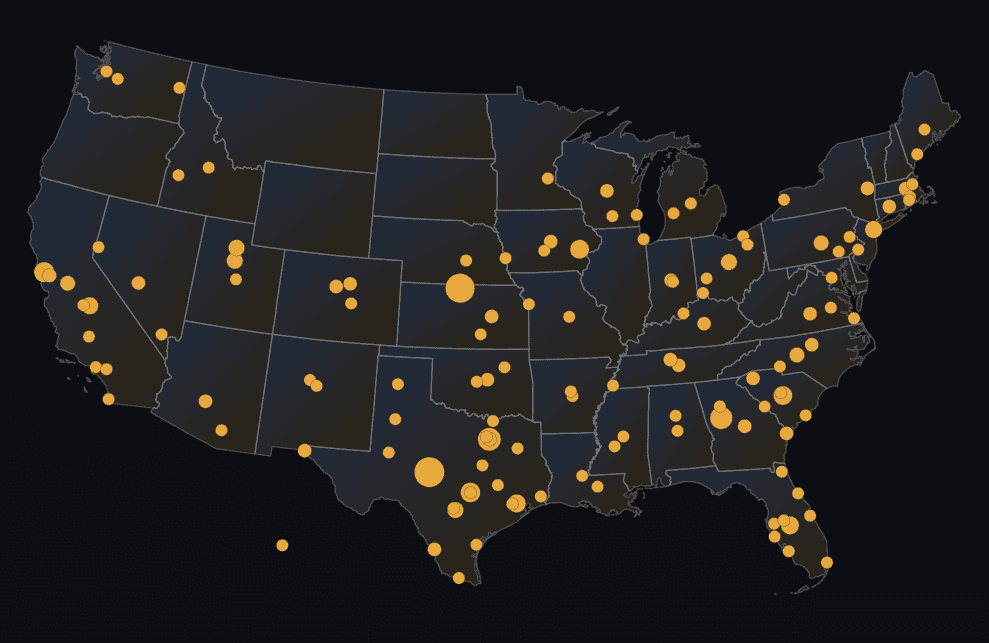
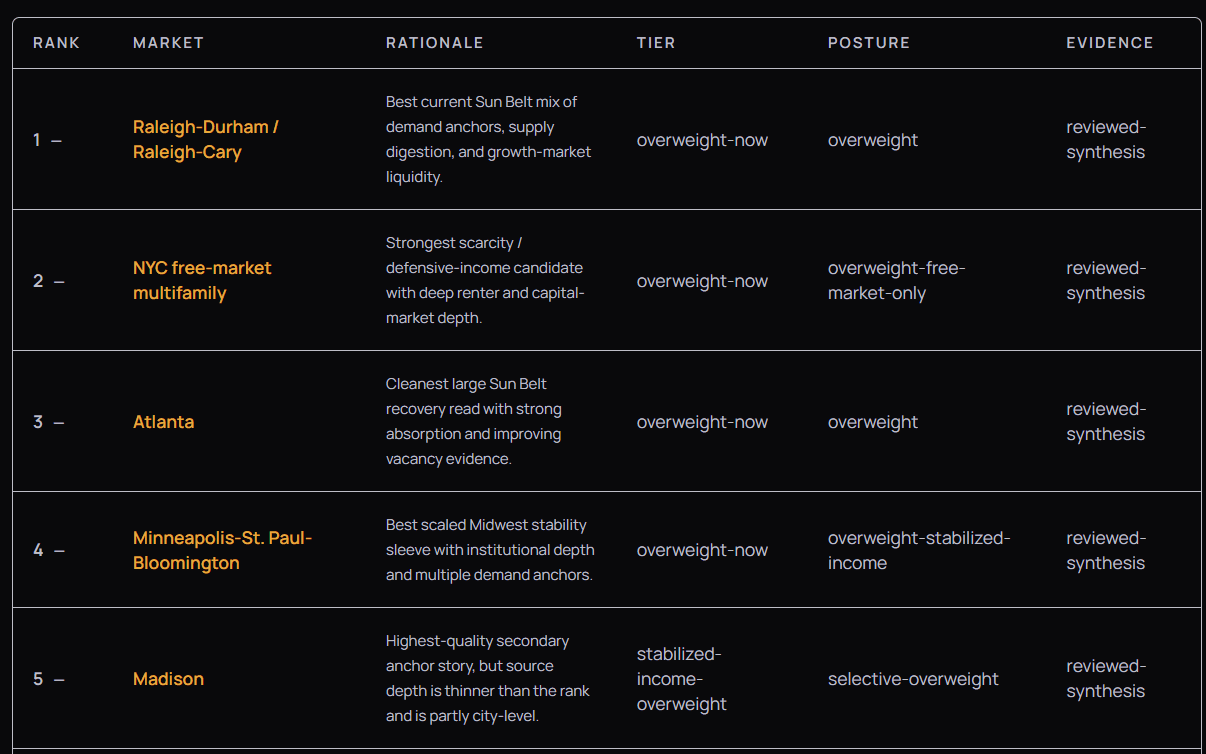
Given the 2026 market cycle, where and how should institutional capital allocate to multifamily nationally?
Where and how should institutional capital allocate to office real estate in 2026?
Where and how should institutional capital allocate to industrial and logistics real estate in 2026?
How should institutional capital allocate to retail nationally in 2026, and which sub-sectors and geographies warrant conviction versus selectivity?
Metro, regional, and national market allocation work for quickly comparing where capital should pay attention.
Where and how should institutional capital allocate to DFW real estate in 2026?
How should capital read Houston in 2026: as a broad scale market, a patient income market, or a metro where only a few corridor-level expressions deserve conviction?
How should capital read Austin in 2026: as a recovery market, a corridor-specific growth market, or a place where only the best basis-reset assets deserve fresh money?
How should capital read San Antonio in 2026: as a steady affordability market, a selective office and industrial market, or a place where patience matters more than beta?
Where should CRE capital allocate within the Seattle/Puget Sound metro in 2026, and how should the Seattle vs. Eastside bifurcation shape position sizing and asset-class selection?
How should capital read Philadelphia in 2026: as a Northeast gateway discount, a life-sciences arbitrage market, a logistics platform, or a highly selective allocation where subma…
Cross-sector research across multifamily, office, industrial, retail, healthcare, hospitality, and mixed-use themes.
Given the 2026 market cycle, where and how should institutional capital allocate to multifamily nationally?
Where and how should institutional capital allocate to office real estate in 2026?
Where and how should institutional capital allocate to industrial and logistics real estate in 2026?
How should institutional capital allocate to retail nationally in 2026, and which sub-sectors and geographies warrant conviction versus selectivity?
How should capital allocate across U.S. life sciences real estate in 2026 given the post-2022 vacancy reset, the hypothesized shift from lab-office toward cGMP / validated product…
How should capital think about Texas retail in 2026 now that the graph has clearer wealth-moat and placemaking corridor pages? Which retail formats actually deserve premium pricin…
Debt markets, CMBS stress, pricing signals, rate volatility, and capital allocation frameworks.
Where is CRE credit stress concentrated as of Q1 2026, and what does the cross-lender delinquency and distress picture mean for underwriters and investors?
Why does CRE feel investable again in early 2026 even while Treasury markets remain unstable, and what is the right way to reconcile improving conviction with still-fragile financ…
What actually defines the CRE recovery as of 2026, and what does that mean for capital allocation? Which parts of the old post-rate-shock thesis still hold, which parts have chang…
What does the 2026 debt market actually mean for Texas underwriting? Where is the market open, where is it merely available, and how should acquisition, development, and rescue-ca…
How should multifamily investors underwrite the 2026 capital-markets environment across agency debt, bank and life-company lending, private credit, CMBS / CRE CLO exposure, prefer…
What market-clearing prices are emerging for distressed office in 2026, and what do those prices actually mean for underwriting?
Signals on distress, repricing, volatility, office conversion pressure, and defensive underwriting.
What market-clearing prices are emerging for distressed office in 2026, and what do those prices actually mean for underwriting?
Where is CRE credit stress concentrated as of Q1 2026, and what does the cross-lender delinquency and distress picture mean for underwriters and investors?
What do broker opinions of value (BOVs) and adjacent valuation marks imply about collateral value as a percentage of loan balance, by loan vintage, time period, and asset class?
The 20 Times Square ground-lease loan returning to special servicing after a missed maturity is a useful reminder that gateway retail / hospitality-adjacent collateral can remain…
What actually makes office conversion work in 2026, and how should underwriters distinguish between residential conversion, mixed-use reinvention, and other adaptive-reuse paths?
What does the 2026 debt market actually mean for office underwriting, and how should borrowers or buyers separate financeable office from recapitalization-only office?
Data centers, AI infrastructure, energy corridors, nearshoring, logistics, and industrial innovation.
Where does AI and advanced industrial demand actually create investable real estate opportunities in Texas? Which nodes deserve to be treated as hyperscale compute, semiconductor…
What does the 2026 digital-infrastructure capital wave actually look like, and where does it create real estate opportunity versus narrative noise?
How should Texas digital-infrastructure corridors be separated in 2026 if the real choice is between logistics-powered land, semiconductor manufacturing, airport-linked advanced m…
How should the AI buildout be understood across both infrastructure and office demand without collapsing those two stories into one?
Where and how should institutional capital allocate to industrial and logistics real estate in 2026?
What do the 2026 industrial occupier signals actually say about demand, site selection, innovation, and capital-market conviction?